

One of the most common questions couples ask before beginning fertility treatment is, “Am I eligible for IVF?” This concern is natural—especially for patients who have been trying to conceive for a long time or who may have already experienced a failed treatment cycle.
Medical Insight: IVF eligibility in India depends on age, reproductive health, and medical evaluation. Pre-IVF tests help doctors plan safe and personalised treatment.
Understanding IVF Eligibility Before Treatment
One of the most common questions couples ask before beginning fertility treatment is, “Am I eligible for IVF?” This concern is natural—especially for patients who have been trying to conceive for a long time or who may have already experienced a failed treatment cycle.
IVF eligibility in India is not about approval or rejection. Instead, it is a medical evaluation process designed to understand whether IVF is the most appropriate treatment and how it can be planned safely and effectively. Eligibility depends on several factors, including age, reproductive health, hormone levels, sperm parameters, and overall medical history. This is why certain tests are required before starting IVF—to guide personalised treatment rather than applying a one-size-fits-all approach.
For patients planning IVF for the first time, or those preparing for another cycle after a previous failure, understanding eligibility criteria and required tests can reduce anxiety and prevent unnecessary delays. If you are already familiar with how IVF works or why a previous cycle may not have succeeded, this guide focuses on the next essential step: proper evaluation before treatment begins.
This article explains IVF eligibility criteria in India clearly and ethically, along with the tests commonly recommended before starting IVF.
Who Is Eligible for IVF Treatment in India?
IVF eligibility in India is determined through individual medical assessment, not rigid rules. In general, IVF may be considered for couples facing infertility due to:
- Blocked or damaged fallopian tubes
- Male-factor infertility
- Ovulation disorders
- Endometriosis
- Unexplained infertility
- Failed IUI or previous IVF attempts
Being eligible for IVF does not always mean treatment starts immediately. In some cases, doctors may recommend preliminary treatment, lifestyle changes, or additional testing before proceeding. The goal of eligibility assessment is to choose the right treatment at the right time, ensuring patient safety and improving the likelihood of success.
IVF Eligibility Criteria by Age
Age is one of the most important considerations in IVF planning, particularly for female patients.
Female Age Considerations
In India, IVF is commonly offered to women between their early 20s and mid-40s. However, eligibility is not based on age alone. Factors such as ovarian reserve, hormone levels, and overall reproductive health are equally important. While younger women generally respond better to IVF, many women in their late 30s and early 40s may still be eligible with personalised treatment strategies.
Male Age Considerations
Male age is usually less restrictive, but sperm quality can decline over time. Semen analysis and, in some cases, advanced sperm testing help determine whether IVF or techniques like ICSI may be required.
Ethical fertility clinics discuss age-related expectations transparently, helping couples make informed decisions rather than offering unrealistic assurances
Medical Conditions That May Affect IVF Eligibility
Certain medical conditions can influence IVF planning and preparation.
Hormonal Issues
Conditions such as thyroid imbalance, PCOS, or elevated prolactin levels may require treatment before IVF begins
Uterine Conditions
Fibroids, polyps, or structural abnormalities of the uterus may affect implantation. Addressing these issues beforehand can improve treatment planning.
Male-Factor Infertility
Low sperm count, motility issues, or sperm DNA fragmentation may influence the choice of IVF technique rather than eligibility itself.
Uterine Conditions
Diabetes, hypertension, autoimmune disorders, or other chronic illnesses do not automatically disqualify patients from IVF, but they require careful medical coordination.

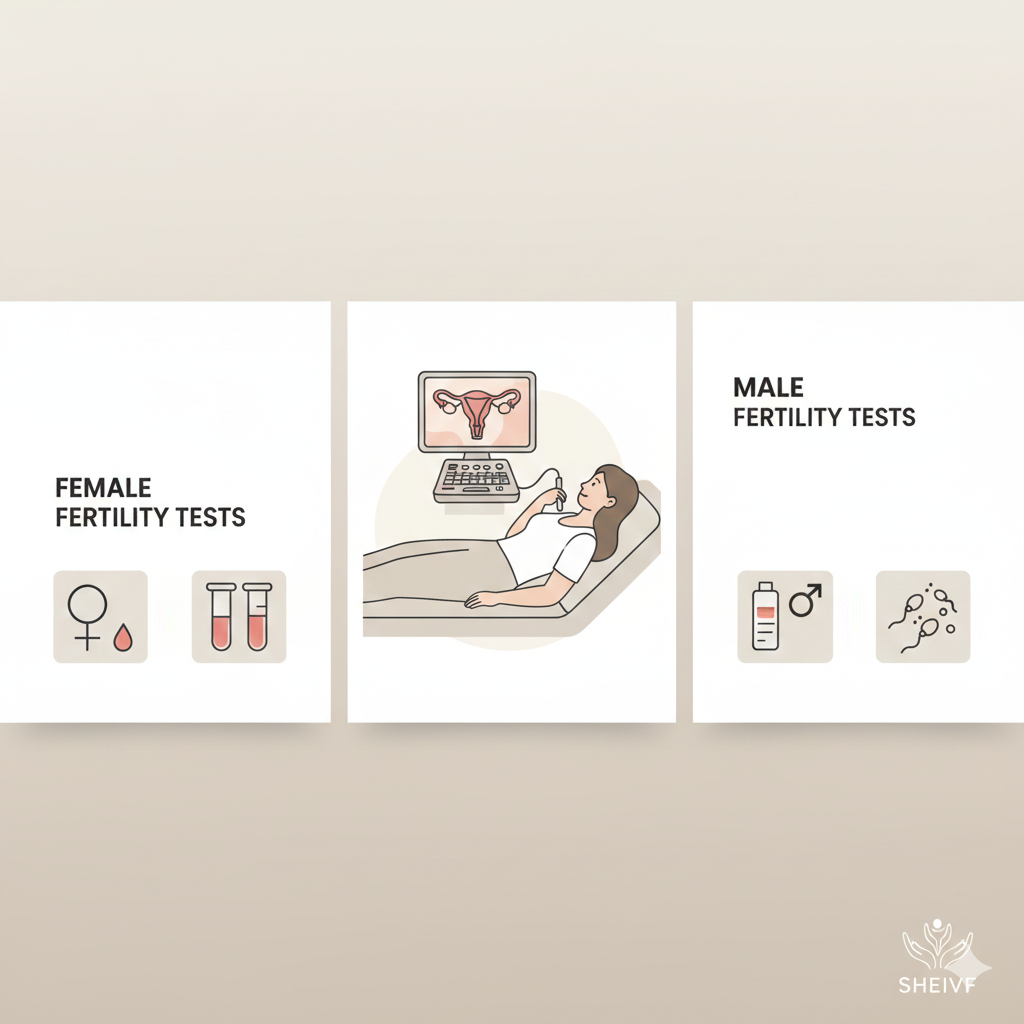
Tests Required Before IVF for Female
Pre-IVF testing for female patients helps doctors understand ovarian function, uterine health, and hormonal balance.
Hormone Tests
Common blood tests may include:
- AMH (Anti-Müllerian Hormone)
- FSH and LH
- Estradiol
- Thyroid function tests
These tests help assess ovarian reserve and guide medication planning.
Ultrasound and Uterine Evaluation
Pelvic ultrasound is used to evaluate:
- Ovaries
- Uterine lining
- Antral follicle count
In some cases, additional procedures may be recommended to assess uterine cavity health.
Infectious Disease Screening
Routine screening ensures patient safety and protects treatment outcomes.
Tests Required Before IVF for Male
Male fertility evaluation is an essential part of IVF planning.
Semen Analysis
This test evaluates sperm count, motility, and morphology. It helps determine whether conventional IVF or ICSI may be appropriate.
Hormonal Tests
If semen parameters are abnormal, hormone testing may be advised to identify underlying causes.
Genetic Screening (If Indicated)
In selected cases—such as severe male-factor infertility—genetic testing may be recommended to guide treatment decisions responsibly.
IVF Eligibility After a Failed IVF Cycle
Patients who have experienced a failed IVF cycle are often concerned about whether they remain eligible for another attempt. In most cases, yes, but reassessment is essential.
After a failed cycle, doctors may recommend:
- Reviewing stimulation response
- Evaluating embryo development
- Assessing uterine receptivity
- Conducting additional tests if needed
Eligibility after IVF failure focuses on learning from the previous cycle, not repeating the same approach. This reassessment helps refine protocols and improves treatment planning.
Why Pre-IVF Evaluation Is Important
Pre-IVF evaluation is not a formality—it plays a critical role in responsible fertility care.
- Helps identify the most suitable treatment approach
- Reduces unnecessary or ineffective cycles
- Supports patient safety and informed consent
- Improves communication and expectation-setting
A thorough evaluation ensures IVF is pursued thoughtfully, with clarity about possible outcomes and next steps.
Why Patients Trust SHEIVF for IVF Evaluation
Patients trust SHEIVF for IVF evaluation because of its ethical, patient-first approach. Eligibility assessments are conducted transparently, focusing on medical suitability rather than rushing into treatment.
Each patient’s history, test results, and personal circumstances are carefully reviewed before recommending IVF. Clear counselling, honest discussion of options, and personalised planning help patients feel supported and informed throughout the decision-making process.
Frequently Asked Questions
What is the age limit for IVF in India?
There is no strict age limit, but eligibility depends on overall reproductive health and medical assessment.
Can I start IVF without tests?
No. Pre-IVF tests are important for safe and effective treatment planning.
Is IVF possible after a failed cycle?
Yes. Many patients remain eligible after reassessment and protocol adjustments.
Are pre-IVF tests painful?
Most tests involve blood work or ultrasound and are generally well tolerated.
How long does IVF evaluation take?
Evaluation usually takes a few days to a few weeks, depending on test requirements.
Do both partners need testing before IVF?
Yes. IVF planning involves evaluation of both female and male partners.
Can lifestyle factors affect IVF eligibility?
Lifestyle factors may influence treatment planning, but they rarely exclude patients completely.
Is IVF eligibility the same for international patients?
Medical criteria remain the same, though logistics and documentation may differ.
If you are considering IVF and would like clarity on eligibility, testing, and treatment planning, consulting a fertility specialist can help you understand the most appropriate next steps for your situation.