
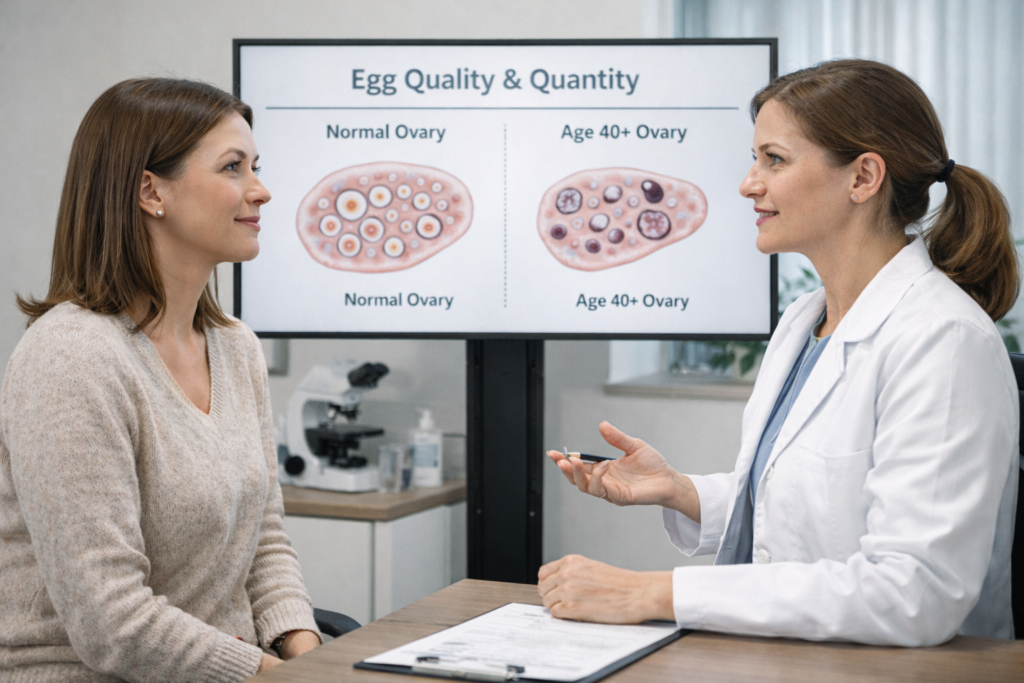
More women today are choosing to start or expand their families in their 40s due to career priorities, personal circumstances, or later marriages. While this shift is increasingly common, fertility concerns often arise alongside it—especially when pregnancy does not happen naturally. Many women ask the same question: Is IVF still possible after 40?
The answer is not a simple yes or no. IVF after 40 is medically possible for many women, but it differs significantly from IVF at a younger age. Factors such as egg quality, ovarian reserve, overall health, and previous fertility history play a major role in determining outcomes. For this reason, fertility treatment after 40 is highly individualised rather than protocol-driven.
Understanding realistic chances, potential risks, and available treatment options helps women make informed, confident decisions. Whether you are considering IVF for the first time or exploring options after a previous attempt, this guide explains what IVF after 40 involves—clearly, respectfully, and without unrealistic promises.
Can IVF Work After 40?
Yes, IVF can work after 40, but outcomes vary more widely than at younger ages. Some women conceive successfully using their own eggs, while others may require advanced approaches such as donor egg IVF. Success depends on multiple medical factors rather than age alone.
IVF after 40 often focuses on:
- Careful evaluation before treatment
- Individualised stimulation protocols
- Realistic counselling about outcomes
Importantly, IVF is not automatically ruled out at 40 or beyond. Instead, fertility specialists assess whether IVF is medically appropriate and how it can be planned responsibly.
How Age Affects Fertility After 40
Age affects fertility primarily through changes in eggs rather than the uterus.
Egg Quantity
Ovarian reserve naturally declines with age. After 40, fewer eggs may respond to stimulation, which can affect the number of embryos available.
Egg Quality
Egg quality declines more sharply than egg quantity. Chromosomal abnormalities become more common, increasing the risk of implantation failure or miscarriage.
Chromosomal Considerations
As age increases, embryos are more likely to have chromosomal differences, which can influence IVF outcomes and pregnancy progression.
These changes are biological—not personal—and vary from one woman to another.
IVF Success Rate After 40 – What to Expect
IVF success after 40 is typically discussed in ranges, not guarantees.
- Ages 40–42: Some women achieve pregnancy using their own eggs, especially with good ovarian reserve
- Ages 43–45: Success with own eggs becomes less common, though not impossible
- Above 45: Donor egg IVF is usually recommended for higher success
Success rates differ due to:
- Individual egg quality
- Uterine health
- Embryo development
- Overall medical condition
A personalised evaluation provides the most accurate expectations.
Risks of IVF After 40
IVF after 40 involves considerations related to both fertility treatment and pregnancy.
Pregnancy-Related Risks
- Higher chance of pregnancy complications
- Increased monitoring requirements
- Greater importance of pre-pregnancy health screening
IVF-Specific Considerations
- Lower embryo yield
- Higher likelihood of cycle cancellation
- Emotional stress due to uncertain outcomes
These risks do not prevent IVF but highlight the need for careful planning and medical supervision
IVF Treatment Options After 40
Several treatment pathways may be considered depending on medical findings.
IVF with Own Eggs
Possible for women with reasonable ovarian reserve and good egg response. Often attempted initially when medically appropriate.
IVF with Donor Eggs
Donor egg IVF significantly improves success rates after 40 because donor eggs typically come from younger women. This option is recommended when egg quality is a limiting factor.
Frozen Embryo Transfer (FET)
In some cases, embryos are frozen and transferred later to optimise uterine readiness.
Each option is discussed based on medical suitability and patient preferences.

When Donor Egg IVF Is Recommended After 40
Donor egg IVF is often suggested when:
- Ovarian reserve is very low
- Multiple IVF cycles with own eggs have failed
- Embryo quality remains poor despite optimisation
This recommendation is based on medical evidence, not age alone. Ethical counselling is essential so patients fully understand emotional, genetic, and medical aspects before deciding.
How to Improve IVF Outcomes After 40
While age cannot be changed, outcomes may improve through thoughtful preparation.
Medical Optimisation
- Detailed fertility evaluation
- Personalised stimulation protocols
- Management of underlying medical conditions
Lifestyle Support
- Balanced nutrition
- Stress management
- Adequate sleep and medical guidance
Choosing the Right Clinic
Experience with age-specific IVF protocols and transparent counselling makes a meaningful difference.
Why Patients Trust SHEIVF for IVF After 40
Patients trust SHEIVF for IVF after 40 because treatment decisions are guided by medical suitability, not routine escalation. Each case is evaluated individually, with honest discussions about realistic outcomes and available options.
The focus remains on patient safety, ethical guidance, and personalised planning—helping women make informed choices without pressure.
Frequently Asked Questions (FAQ)
Is IVF possible after 40?
Yes. IVF is possible for many women after 40, though success varies individually.
What is IVF success rate at age 40?
Success rates vary widely and depend on egg quality, health, and treatment approach.
Is donor egg IVF better after 40?
Donor egg IVF often offers higher success when egg quality is a limiting factor.
Are IVF risks higher after 40?
Some pregnancy and treatment-related risks increase with age, requiring careful monitoring.
Can I use my own eggs after 40?
In some cases, yes. Medical evaluation determines feasibility.
H4: How many IVF cycles are recommended after 40?
This depends on response, embryo quality, and patient preference.
Is IVF after 45 possible?
IVF with donor eggs is generally recommended at this stage for better outcomes.
Does IVF after 40 always require donor eggs?
No. Donor eggs are suggested based on medical findings, not age alone.
If you are considering IVF after 40 and would like clarity on your options, consulting a fertility specialist can help you understand what approach may be most appropriate for your situation.